
How a 25 MLD Sewage Treatment Plant Is Built: Step-by-Step Civil Execution Explained
Introduction
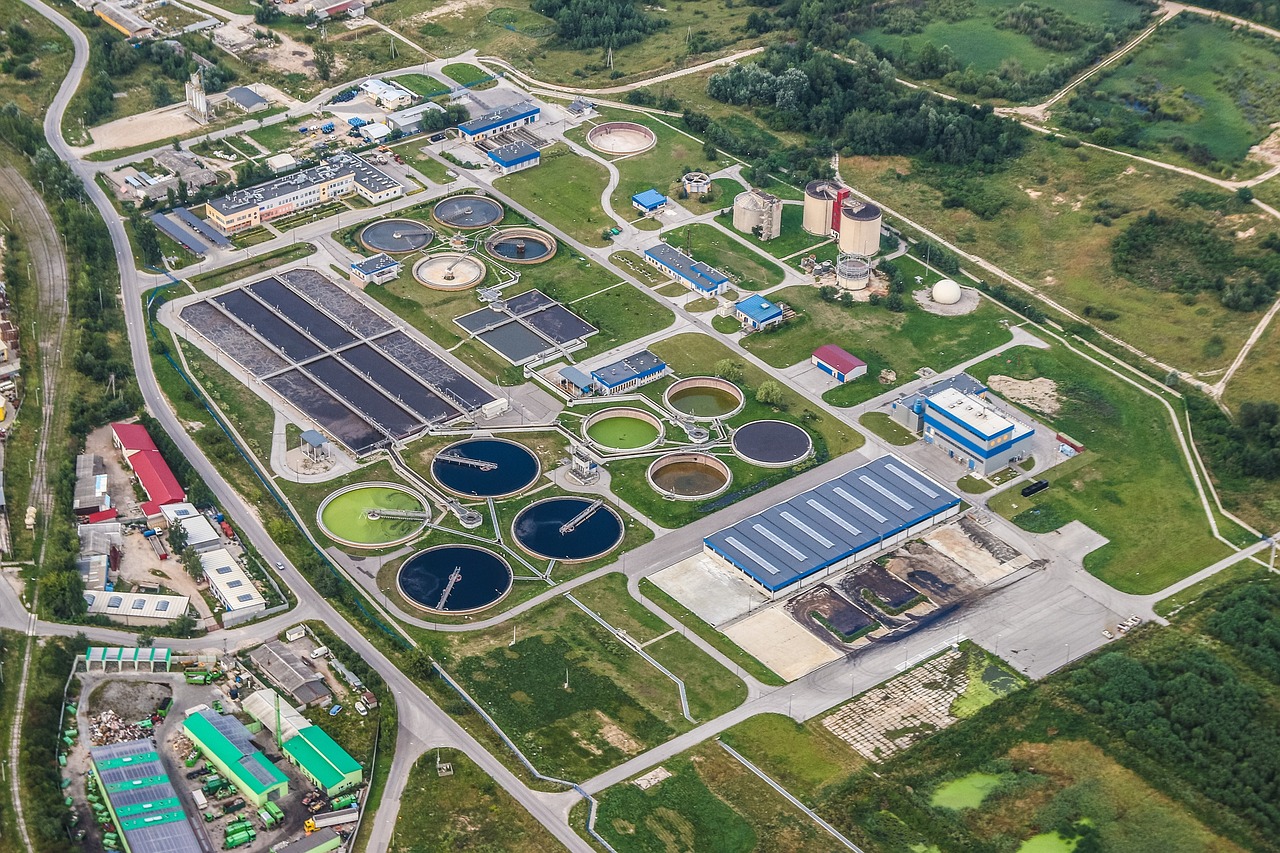
A 25 MLD Sewage Treatment Plant (STP) is not just a construction project; it is a critical public infrastructure system that protects rivers, groundwater, and urban health.
Every day, such a plant treats 25 million litres of sewage, converting polluted wastewater into safe, reusable water through a combination of civil engineering, mechanical systems, and biological processes.
While most people see only the finished plant, very few understand the step-by-step engineering, precision construction, and complex coordination that go into building a facility of this scale.
From massive RCC tanks and deep foundations to aeration systems, decanters, filtration units, and sludge-handling machinery, an STP is a perfect example of how civil and mechanical engineering work together to solve real-world sanitation challenges.
In this article, we break down the complete construction and working process of a 25 MLD STP, explaining how each structure is built, what equipment is installed, and how the entire system functions as one integrated treatment plant.
Table of Contents
1. What Does a 25 MLD STP Actually Mean?
The term 25 MLD STP means that the Sewage Treatment Plant is designed to treat 25 million litres of wastewater every single day.
This capacity defines how much sewage the plant can safely receive, process, and convert into treated water that meets environmental discharge or reuse standards. In simple terms, it tells us the maximum daily load of sewage the system is engineered to handle without failure.
A 25 MLD STP typically serves a population of around 1.5 to 2.5 lakh people, depending on per capita water usage, industrial contribution, and infiltration factors.
Indian urban planning standards generally estimate sewage generation at 120–150 litres per person per day, which is how this population-to-capacity mapping is calculated.
This makes 25 MLD an ideal capacity for mid-size cities, fast-growing urban zones, and large municipal wards.
This capacity is widely adopted because it strikes a practical balance between land availability, construction cost, operational efficiency, and future expansion potential.
Smaller plants may struggle with overflow during monsoons or population growth, while much larger plants demand heavy capital investment and complex logistics.
A 25 MLD plant offers an efficient middle ground—technically manageable and economically viable.
Another critical concept in STP design is the difference between the daily average inflow and peak inflow. While the plant is rated at 25 MLD on a daily basis, sewage does not enter at a constant rate throughout the day.
Early mornings and evenings usually carry peak hydraulic loads, often 2 to 2.5 times the average hourly flow.
Therefore, all hydraulic structures, channels, screens, reactors, and pumps are designed to handle peak flow conditions safely, even though the treatment capacity is calculated on a daily average.
2. Basic Process Flow of a Modern STP
A modern Sewage Treatment Plant follows a systematic, multi-stage treatment process designed to remove physical, chemical, and biological pollutants from wastewater before it is safely reused or discharged.
The standard treatment sequence flows as:
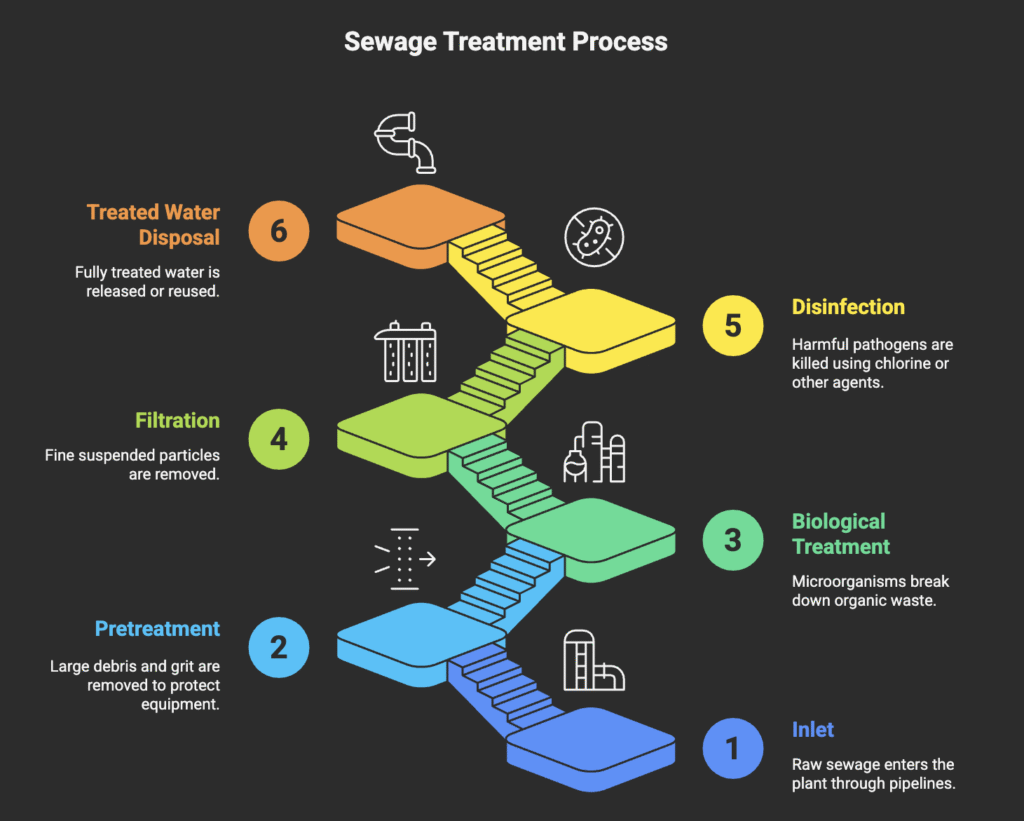
Inlet → Pretreatment → Biological Treatment → Filtration → Disinfection → Treated Water Disposal
At the inlet stage, raw sewage enters the plant through underground pipelines. It then passes through pretreatment units where large debris, plastics, rags, and grit are removed to protect downstream equipment.
After this, the wastewater enters the biological treatment zone, which is the core of the plant where microorganisms break down organic waste.
The treated water is then passed through filtration units to remove fine suspended particles, followed by disinfection using chlorine or other agents to kill harmful pathogens.
Finally, the fully treated water is either released into a natural water body or reused for gardening, flushing, or industrial purposes.
Alongside the water treatment process runs a parallel sludge handling system, which manages the solid waste separated during treatment.
The biological sludge generated in the reactors is first sent to a thickener, where excess water is removed to concentrate the sludge.
It is then transferred to dewatering units such as centrifuges, which further reduce the moisture content.
The dewatered sludge is finally moved to a sludge storage area for safe disposal or reuse as manure after proper treatment.
A key distinction in STP technology lies between conventional STP systems and SBR-based STP systems.
Conventional STPs operate on a continuous flow process, where sewage constantly moves from one tank to another such as aeration tanks, clarifiers, and filter units.
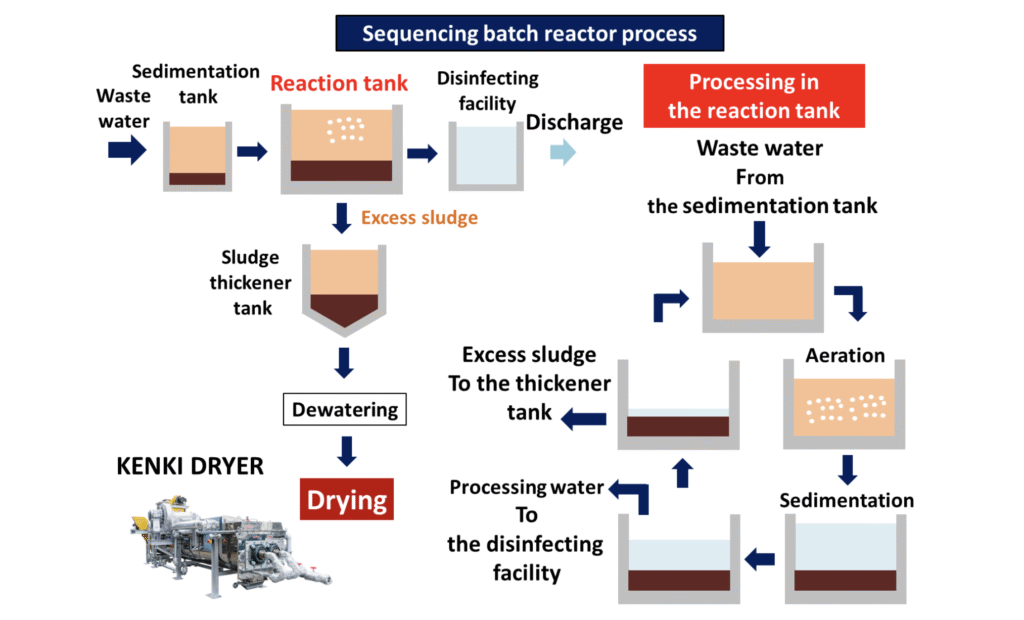
In contrast, the Sequential Batch Reactor (SBR) system treats wastewater in time-based cycles within the same tank, following a sequence of fill, aeration, settling, and decanting.
SBR systems require fewer tanks, occupy less land, offer better control over treated water quality, and are highly suitable for urban environments with fluctuating sewage loads.
This is why SBR technology is widely adopted for modern 25 MLD STPs in growing cities.
3. Pre-Treatment Unit (PTU) – First Line of Defense
The Pre-Treatment Unit (PTU) is the very first and most critical stage of any Sewage Treatment Plant, as it prepares raw sewage for biological treatment by removing all unwanted physical debris.
At AstronCorp, the execution of PTU structures is handled with extreme precision because the performance of the entire STP depends on how effectively this initial screening system works.
Civil Scope
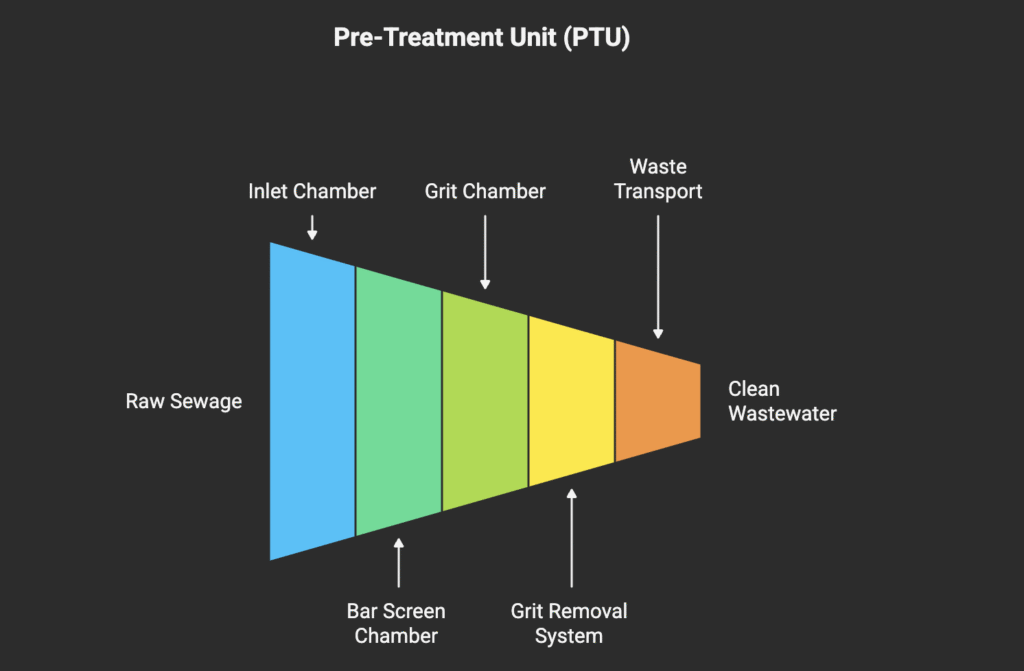
The civil construction of the PTU includes the inlet chamber, which receives incoming sewage from external pipelines and regulates the flow into the plant.
This leads into the bar screen chamber, where large floating solids are intercepted.
After screening, sewage flows into the grit chamber, where heavy particles like sand, silt, and small stones settle down due to controlled flow velocity.
In addition, RCC channels and bypass arrangements are constructed to safely divert sewage during maintenance or emergency conditions.
These structures demand accurate levels, smooth flow transitions, and complete watertightness—areas where AstronCorp’s RCC execution systems play a key role.
Mechanical Scope
From the mechanical side, the PTU is equipped with either manual or mechanical bar screens, depending on the plant design and automation level.
Mechanical screens are commonly used in large-capacity plants for continuous removal of waste.
A dedicated grit removal system is installed to extract settled sand and grit from the chamber.
The collected waste is then transported using conveyors and skip buckets, ensuring hygienic handling and preventing accumulation within the plant premises.
How It Works
As sewage enters the PTU, plastics, rags, paper, stones, and sand are removed before the wastewater reaches the biological reactors.
This process is crucial because these materials can damage pumps, block pipelines, interfere with aeration systems, and reduce treatment efficiency.
By ensuring clean and controlled inflow conditions, the PTU protects all downstream equipment and significantly increases the operational life and reliability of the entire STP system.
4. Sequential Batch Reactor (SBR) – The Heart of the STP
The Sequential Batch Reactor (SBR) is the core biological treatment system of a modern Sewage Treatment Plant.
It is inside these massive reactors that the actual purification of sewage takes place through controlled biological processes.
At AstronCorp, the execution of SBR structures is treated as a high-precision engineering task because even minor construction deviations can directly affect treatment efficiency and plant performance.
Civil Structures
The civil scope of SBR construction involves building massive RCC tanks, often divided into multiple parts and executed in several vertical lifts.
These tanks are designed to hold millions of litres of sewage under continuous operating conditions.
Inside the tanks, internal partition walls are constructed to control flow direction and reaction sequencing.
For safe plant operation and maintenance, walkways and access platforms are provided along the reactor edges.
In addition, selector zones and splitter boxes are built as part of the hydraulic control system to distribute incoming sewage uniformly across different SBR basins.
These RCC structures demand precise shuttering, vibration-free concreting, strict dimensional control, and absolute water tightness—standards consistently maintained in AstronCorp’s execution systems.
Mechanical & Process Equipment
Once the civil tanks are ready, the biological and mechanical systems are installed.
The most critical component is the diffused aeration system, which supplies oxygen to microorganisms that break down organic waste.
Decanters are installed to remove treated water from the reactor after the treatment cycle is complete.
High-capacity air blowers and air pipelines maintain the required oxygen levels throughout the process, while submersible mixers inside the basins ensure uniform mixing of sewage and biomass.
All these systems must work in perfect coordination with the civil structures to achieve stable treatment performance.
How SBR Works (Cycle Logic)
Unlike conventional treatment systems that operate on continuous flow, the SBR follows a time-based batch process within the same tank.
Each treatment cycle consists of four main phases. During the Fill Phase, raw sewage is introduced into the reactor.
In the Aeration Phase, oxygen is supplied to activate microorganisms that digest organic pollutants.
This is followed by the Settling Phase, where solids settle at the bottom of the tank under calm conditions.
Finally, in the Decanting Phase, clear treated water is drawn off from the top using decanters.
The key difference between conventional STP systems and SBR technology is that conventional plants require separate aeration tanks and clarifiers operating continuously, while SBR performs all treatment steps inside a single tank in repeated time cycles.
This makes SBR more compact, land-efficient, energy-optimised, and better suited for fluctuating sewage loads, which is why it is the preferred choice for modern 25 MLD urban STPs.
5. Disc Filter – Tertiary Treatment Stage
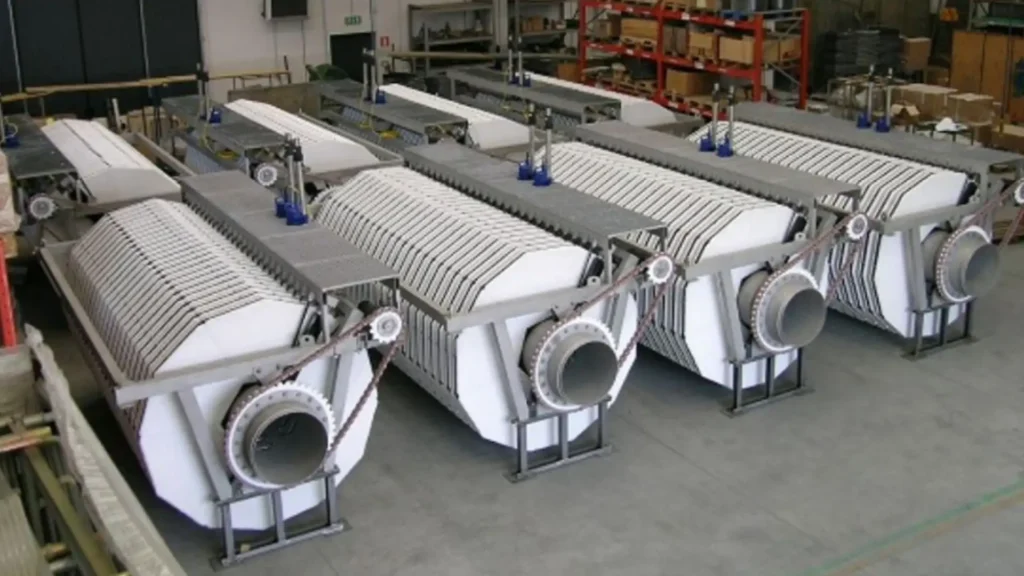
The Disc Filter represents the tertiary or polishing stage of a modern Sewage Treatment Plant, where treated water undergoes final fine filtration before disinfection and reuse or discharge.
This stage is essential for achieving consistently clear effluent quality, especially in STPs designed for water reuse.
At AstronCorp, the civil execution of Disc Filter systems is carried out with high dimensional accuracy, as even small deviations can directly affect filtration efficiency and mechanical alignment.
Civil Scope
The civil scope includes the construction of the Disc Filter building, which houses the filtration equipment in a controlled and protected environment.
This also involves precise RCC foundations designed to support rotating mechanical equipment and dynamic loads.
In addition, dedicated backwash channels are constructed to carry away the filtered waste solids during the cleaning cycle.
These elements require vibration-free concreting, accurate levels, and long-term durability to ensure trouble-free operation.
Mechanical Scope
On the mechanical side, the heart of this system is the rotating disc filter unit, which contains multiple fine mesh discs mounted on a central shaft.
Backwash pumps are installed to clean the filter media automatically by reversing the flow using pressurized water.
The entire system is governed through control automation, ensuring that filtration and backwash cycles operate automatically based on water quality and system demand.
How It Works
After secondary biological treatment, the partially clarified water enters the Disc Filter system, where it is passed through fine filter media.
This stage removes very fine suspended solids that escape biological treatment, resulting in clear, polished water.
The filtered impurities are washed away through the backwash system, while the clean water moves forward for disinfection.
This process prepares the treated water for safe reuse in gardening, flushing, industrial applications, or final discharge into natural water bodies.
6. Chlorine Contact Tank (CCT) – Disinfection System
The Chlorine Contact Tank (CCT) is the final and most critical safety barrier in a Sewage Treatment Plant, where treated water is disinfected before discharge or reuse.
Even after advanced biological and filtration processes, disinfection is essential to eliminate harmful microorganisms.
At AstronCorp, the CCT is executed with strict hydraulic precision because effective disinfection depends entirely on correct flow control and contact time.
Civil Scope
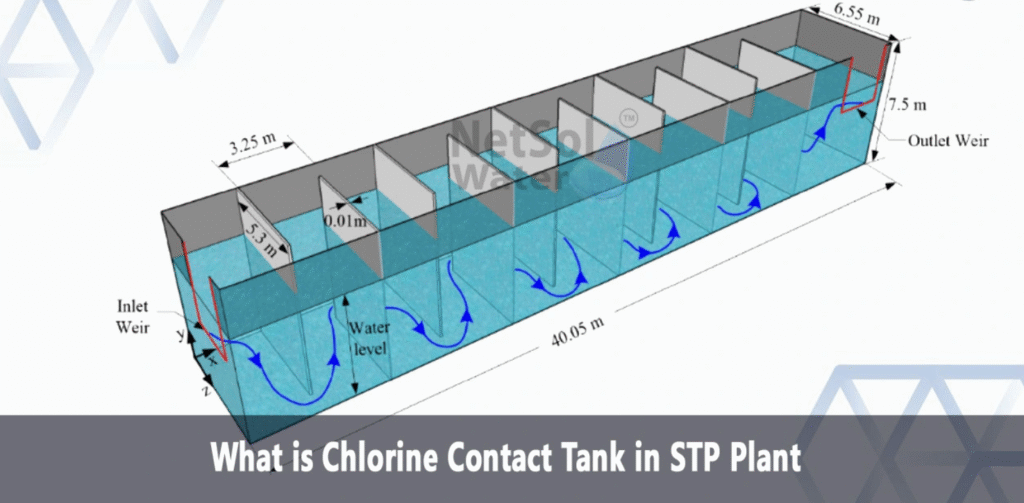
The civil construction of the CCT consists of a specially designed RCC zig-zag flow tank, which forces the treated water to travel through a long, controlled path.
This flow pattern ensures that water remains in contact with chlorine for the required duration.
Inside the tank, baffle walls are constructed to guide the flow uniformly and prevent short-circuiting of water.
The entire structure is designed around contact time control, which is a key engineering parameter that directly impacts the efficiency of disinfection.
These structures demand watertight RCC construction, accurate dimensions, and smooth finishes standards consistently maintained in AstronCorp’s execution.
Mechanical Scope
From the mechanical side, the CCT is equipped with a chlorine dosing system that injects a controlled quantity of disinfectant into the treated water.
Hypochlorite storage tanks are provided for safe chemical storage, along with dosing pumps to ensure accurate and continuous chemical feed based on flow and residual chlorine requirements.
Proper integration of these systems with the civil tank is essential for stable and safe plant operation.
How It Works
As the filtered treated water enters the CCT, a measured dose of chlorine is added, and the water is held inside the tank for a specific duration known as the contact time.
During this period, bacteria, viruses, and harmful pathogens are destroyed, making the water safe for environmental discharge or reuse.
This final disinfection step plays a decisive role in protecting public health, nearby water bodies, and downstream users.
7. Sludge Handling System – COTDM Section
While treated water is the most visible output of a Sewage Treatment Plant, sludge management is equally critical for long-term plant performance and environmental safety.
The sludge generated during biological treatment contains concentrated organic matter and must be handled, thickened, dewatered, and stored properly.
At AstronCorp, the construction of the complete sludge handling system under the COTDM section is executed with strict functional and structural accuracy, as these systems operate continuously under heavy loads and corrosive conditions.
a) Thickener
The thickener is the first stage of sludge concentration. Here, the biological sludge is allowed to settle under gravity, separating excess water from the solid mass.
This process significantly reduces the sludge volume, making downstream handling more efficient.
The thickener structure requires perfect circular geometry, smooth internal finishes, and accurate slope control to ensure uniform settling and reliable sludge withdrawal.
b) Centrate Sump
After sludge is dewatered, the separated liquid, known as centrate, is collected in the centrate sump.
This liquid is rich in nutrients and is sent back to the STP inlet for re-treatment.
The centrate sump must be watertight and hydraulically balanced to prevent overflow and ensure seamless recycling of this high-load liquid into the treatment process.
c) Centrifuge Building
The centrifuge building houses high-speed sludge dewatering machines that spin the thickened sludge at very high RPM to separate solid matter from water.
These are dynamic, vibration-sensitive machines that impose heavy mechanical loads on civil foundations.
The RCC foundations, machine pedestals, vibration isolation systems, and structural flooring require high-precision execution, an area where AstronCorp’s industrial RCC experience plays a decisive role.
d) Sludge Storage Area
Once dewatered, the sludge is transferred to the sludge storage area for temporary holding before final disposal or reuse.
This area is designed for safe handling, odour control, drainage, and vehicle access for sludge transportation.
Proper slope, leachate collection, and surface durability are essential to prevent ground contamination and operational issues.
Together, these systems ensure that sludge is managed safely, efficiently, and in full compliance with environmental norms, completing the material balance of the STP without creating secondary pollution risks.
8. Pump Houses, DG Area & Electrical Infrastructure
The uninterrupted operation of a Sewage Treatment Plant depends heavily on its pumping systems, power supply, and electrical control infrastructure.
These systems ensure that sewage, treated water, air, and sludge move continuously through different treatment stages without interruption.
At AstronCorp, these utility-focused structures are executed with high structural precision because even minor alignment or vibration issues can lead to long-term mechanical failures.
Civil Scope
The civil scope includes the construction of heavy-duty pump foundations, designed to absorb vibrations from continuously operating sewage and recirculation pumps.
Dedicated DG foundation blocks are constructed to support standby diesel generators under dynamic loading conditions.
MCC (Motor Control Center) rooms are built as protected RCC enclosures to house electrical panels, control systems, and automation equipment.
Extensive cable trenches are also constructed across the plant to safely route power and control cables between pumps, blowers, panels, and control rooms.
All these civil works demand perfect levels, vibration-resistant concrete, and watertight construction.
Mechanical & Electrical Scope
On the mechanical side, the plant is equipped with sewage pumps to lift incoming wastewater and recirculation pumps to control internal hydraulic flows.
High-capacity blowers supply air to the aeration systems inside the SBR tanks.
To ensure uninterrupted plant operation during power failures, a standby diesel generator (DG) is installed as a backup power source.
All electrical and mechanical systems are interconnected through automated control panels inside the MCC rooms, allowing centralized monitoring and control of the entire treatment process.
Together, these systems form the operational backbone of the STP, ensuring that treatment continues safely, efficiently, and without downtime even under fluctuating load conditions or power disruptions.
9. Plant Utilities & Internal Infrastructure
Beyond the main treatment units, a Sewage Treatment Plant depends on a well-planned network of internal utilities and support infrastructure to function smoothly and safely.
These elements ensure uninterrupted movement of equipment, personnel, power, and fluids across the plant.
At AstronCorp, these utility structures are executed with the same level of technical discipline as the core treatment units, because operational efficiency depends heavily on these supporting systems.
The plant is laid with internal RCC roads to allow the movement of maintenance vehicles, sludge trucks, and emergency access at all times of the year.
A structured network of cable trenches is constructed to safely carry electrical and control cables across the facility without surface exposure.
Pipe supports are provided to properly align and carry large-diameter pipelines for treated water, sludge, air, and return flows, ensuring stress-free hydraulic operation.
To manage wash water, leakages, and rainwater, dedicated drain sumps and stormwater drains are constructed across the plant to prevent flooding and waterlogging.
Guard rooms and operator buildings are also built as part of the internal infrastructure, providing secure site access control and dedicated operating spaces for plant personnel.
All these components together form the functional ecosystem that allows an STP to operate continuously, safely, and efficiently.
10. Hydro Testing – Proving Structural Water Tightness
Hydro testing is one of the most critical quality assurance stages in the construction of a Sewage Treatment Plant, as it directly validates the water-tightness, structural integrity, and leak-proof performance of all tanks and hydraulic structures.
At AstronCorp, hydro testing is treated as a mandatory verification process before commissioning, because even the smallest undetected leakage can lead to long-term structural damage and operational failure.
The process begins with the slow and controlled filling of RCC tanks with water, ensuring that hydrostatic pressure is applied gradually and uniformly.
Once the tanks reach the desired water level, the surfaces, joints, construction cracks, and pipe penetrations are closely observed during the leakage monitoring phase. Even minor seepage points are identified and documented for rectification.
In parallel, all connected pipelines undergo pressure testing to confirm that they can safely withstand the designed operating pressures without failure.
Any leakage detected in pipelines, construction joints, honeycombs, or embedded insert locations is addressed through crack treatment, grouting, and joint sealing using approved chemical and cementitious compounds.
Only after all leakage points are fully rectified and re-tested is the structure certified as water-tight and ready for commissioning.
Hydro testing acts as the final proof of construction quality, ensuring that the STP will perform reliably under continuous hydraulic loading for decades.
11. Trial Run & Commissioning
Trial run and commissioning mark the phase where the entire Sewage Treatment Plant is brought to life under real operating conditions.
This stage confirms that all civil structures, mechanical systems, electrical equipment, and automation controls work together as one integrated system.
At AstronCorp, this phase is treated as a controlled performance verification process rather than just a formality, because it directly defines the long-term reliability of the plant.
The process begins with running all equipment together, including sewage pumps, recirculation pumps, blowers, mixers, decanters, disc filters, and chemical dosing systems.
Once stable operation is achieved, the plant undergoes load testing at partial and full capacity, where sewage inflow is gradually increased to verify hydraulic stability, mechanical performance, and biological process response under different operating loads.
During this phase, treated water quality parameters such as BOD (Biochemical Oxygen Demand), COD (Chemical Oxygen Demand), and TSS (Total Suspended Solids) are continuously monitored and tested in the laboratory to confirm compliance with pollution control board norms.
Based on these results, fine-tuning of blower air flow, aeration timing, settling duration, and decant cycles is carried out to optimise biological efficiency and ensure consistent output quality.
Successful trial run and commissioning certify that the STP is fully functional, process-stable, and ready for continuous public operation, completing the transformation from a construction project into a live environmental infrastructure system.
12. Why STP Construction Is Technically Demanding
Sewage Treatment Plant construction is among the most technically intensive segments of civil infrastructure, as it combines massive RCC works with precision mechanical installation and strict environmental compliance.
Unlike conventional buildings or roads, an STP must perform continuously under water load, chemical exposure, and mechanical stress.
At AstronCorp, this complexity is addressed through disciplined planning, system-based execution, and multi-level quality control.
One of the primary challenges is the large RCC volumes involved in tanks, basins, foundations, and hydraulic channels.
These structures demand uninterrupted concreting, strict temperature control, and uniform compaction to avoid cold joints and structural defects.
Adding to this complexity are complex shuttering cycles, with multiple lifts, curved walls, internal partitions, and tight tolerances that require precise formwork engineering and sequencing.
STP construction also involves heavy mechanical coordination, where civil readiness must perfectly match the installation schedules of blowers, decanters, centrifuges, pumps, and filtration units.
Any mismatch in levels, anchor bolts, or foundation geometry can delay commissioning. Alongside this runs continuous QA/QC, including slump tests, cube tests, hydro testing, and alignment checks at every critical stage.
Perhaps the most unforgiving requirement in STP construction is the zero-leakage tolerance.
Even microseepage through joints or construction cracks can lead to long-term structural damage and process failure.
This is why waterproofing systems, joint treatments, and hydro testing are treated as non-negotiable stages.
All of this unfolds under tight PMC and consultant monitoring, where every pour, test, and installation is inspected, documented, and approved before moving forward.
Together, these factors make STP construction a field where engineering discipline, execution accuracy, and quality control are not optional—they are essential for success.
13. Key Challenges in 25 MLD STP Execution
Executing a 25 MLD Sewage Treatment Plant presents a unique set of engineering, logistical, and operational challenges that go far beyond conventional civil construction.
These projects demand continuous coordination between civil, mechanical, electrical, and automation teams.
At AstronCorp, managing these challenges is treated as a system-based process rather than isolated site activities.
One of the first major hurdles is deep excavation, often required for inlet chambers, pump houses, sumps, and large reactor foundations.
These excavations frequently extend below the natural ground level, making stability, dewatering, and safety critical.
This is closely followed by water table interference, especially in urban and low-lying zones, where continuous dewatering and protection against soil collapse become essential to avoid delays and cost overruns.
Another critical challenge is concrete volume control. With massive RCC pours across multiple tanks, lifts, and structures, even small deviations between theoretical quantity, ordered volume, and actual consumption can lead to significant financial impact.
Parallel to this runs steel reconciliation, where strict tracking of issued steel, fixed reinforcement, cutting waste, and scrap recovery is necessary to prevent losses over the long execution cycle.
The complexity increases further during mechanical installation sequencing.
Equipment such as blowers, decanters, disc filters, pumps, and centrifuges must be installed only after precise civil readiness.
Any mismatch in foundation level, insert placement, or anchor alignment can disrupt commissioning schedules.
Finally, power and automation integration brings its own challenges—coordinating electrical panels, MCC rooms, sensors, instrumentation, and PLC systems to ensure smooth, synchronized plant operation.
Together, these challenges make 25 MLD STP execution a discipline that allows no shortcuts.
It demands strong planning, real-time monitoring, strict reconciliation systems, and seamless coordination across all engineering domains to achieve timely and defect-free completion.
14. Final Outcomes of a Properly Executed STP
A properly executed Sewage Treatment Plant delivers benefits that extend far beyond the project site and continue for decades.
When every civil structure, mechanical system, and process parameter is executed as per engineering intent, the most visible outcome is the release of clean effluent that consistently meets Pollution Control Board (PCB) norms.
This ensures legal compliance, environmental safety, and dependable long-term plant operation.
One of the most valuable outcomes is the generation of reusable treated water, which can be safely used for gardening, landscaping, flushing systems, cooling towers, and industrial processes.
This significantly reduces dependency on fresh water sources and supports water conservation in urban and industrial zones.
A well-functioning STP directly contributes to reduced river and groundwater pollution by preventing untreated sewage from entering natural water bodies.
This protects ecosystems, public health, and downstream agricultural zones.
Most importantly, it enables long-term sustainable urban sanitation, forming the invisible backbone of smart cities, industrial growth, and population expansion.
At AstronCorp, this final outcome is treated as the true success metric of STP construction, not just structural completion, but the creation of a reliable, sustainable, and environmentally responsible treatment system that serves communities for decades.